
Why Birmingham's Hard Water Wears Out Water Heaters Faster
If a water heater in Birmingham seems to fail sooner than the box promised, hard water is usually the reason. The water itself is the culprit, not a defective unit.
By the Birmingham Apex Plumbing team.
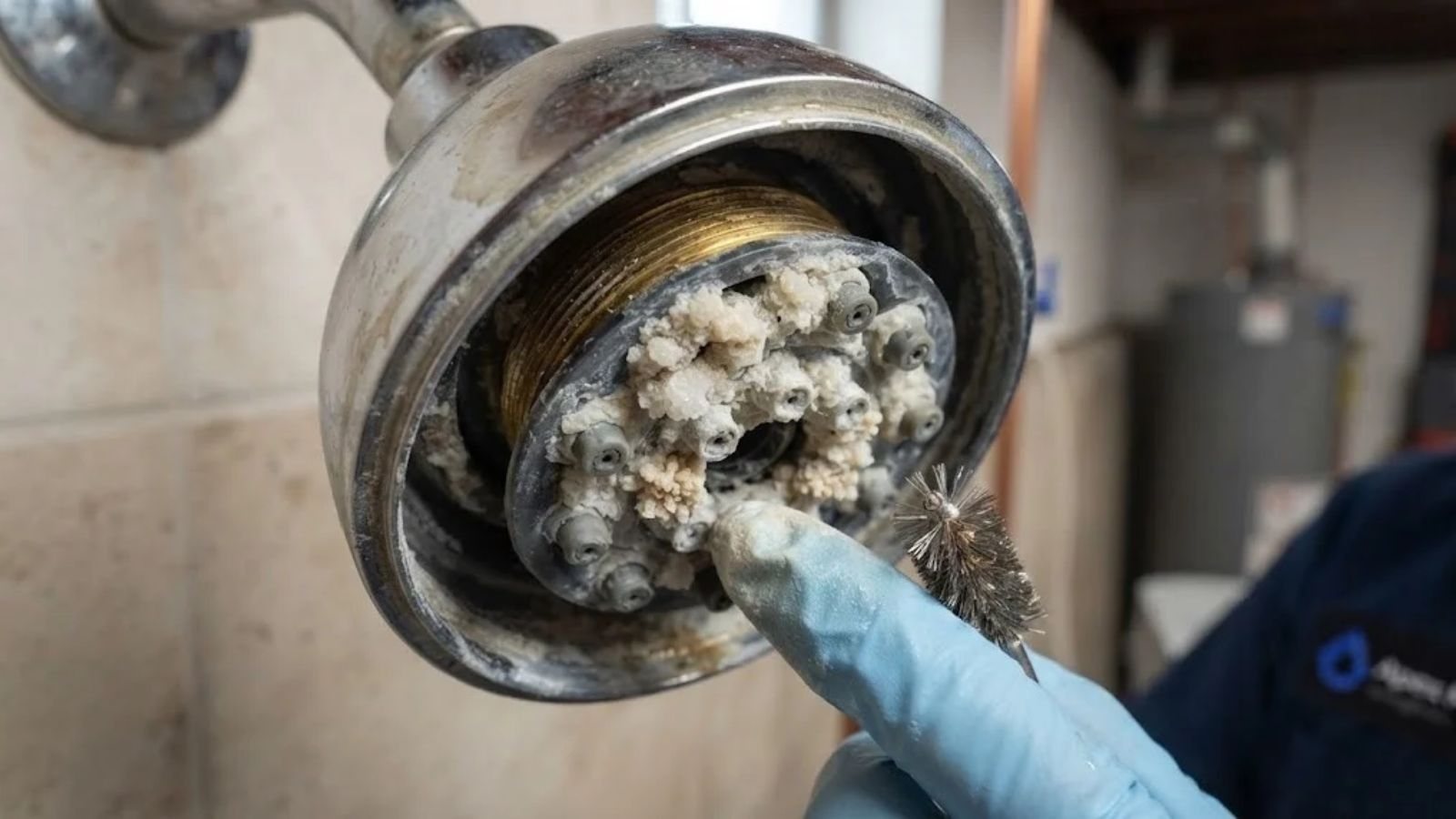
The Birmingham Water Works Board supplies water that runs harder than average for the Southeast. Hardness comes from dissolved calcium and magnesium picked up as water moves through rock and soil before treatment, and while it's not a health concern, it's genuinely rough on anything that heats water. A water heater rated for 10 to 12 years in a soft-water city often falls short of that here, not because the unit is lower quality, but because it's fighting scale buildup the entire time it's in service.
Scale, explained simply
As water heats, dissolved minerals come out of solution and settle as a hard, chalky layer of scale, mostly on the heating element (electric units) or along the bottom of the tank (gas units). That layer acts like insulation between the heat source and the water, so the unit has to run longer to reach the same temperature. Longer runtime means more wear on the element or burner, more strain on the thermostat, and a tank interior that corrodes faster once sediment traps moisture against the metal.
The same mechanism affects a tankless unit, just concentrated into a much smaller heat exchanger instead of spread across a tank. That's part of why tankless water heater service - an annual descale - is treated as required maintenance here rather than an optional extra, the way it might be pitched in a market with softer water.
Softening, flushing, and realistic expectations
A whole-home water softener addresses the root cause by removing hardness minerals before they ever reach the water heater, which is the most direct fix if scale-related failures keep coming up. Short of that, an annual tank flush clears sediment before it hardens into a thick layer, and it's a small add-on to a routine service call rather than a project of its own. Skipping both for years is how a tank that should last a decade ends up needing water heater repair calls well before that, eventually followed by full replacement.
Homeowners in Hoover dealing with a water heater that seems to be aging faster than expected are almost always looking at the same hard-water pattern that shows up across the rest of this coverage area, regardless of how new the surrounding subdivision is.
Not a mystery, just a maintenance step
A tank flush is a straightforward process. The cold water supply is shut off, a hose is connected to the drain valve near the bottom of the tank, and the tank is drained fully while the hot water side is opened at a fixture to let air into the system. Sediment that's settled at the bottom washes out with the draining water, and the tank is refilled once it runs clear. For a tank that's never been flushed, the first one can take longer and pull out noticeably more sediment than a tank that gets this done annually. That difference is itself a sign of how much buildup accumulates when the step gets skipped for years at a stretch.
A tank that's gone five or more years without a flush sometimes can't be flushed safely at all. Sediment that's hardened against the tank bottom can dislodge and clog the drain valve. Disturbing years of buildup can also expose a weak spot in the tank that was being held together by scale. In that situation, a technician makes the call on whether flushing is still worth attempting or whether the tank is close enough to failing that replacement is the more sensible next step.
When maintenance won't fix it anymore
A few signs point to a tank that's beyond the point where a flush meaningfully helps. Rust-colored water coming specifically from the hot side (not the cold) suggests the tank's interior lining has already failed and corrosion has started, which a flush won't reverse. A tank that's noticeably louder than it used to be, even after a flush, often means scale has bonded to the heating element or burner assembly rather than just settling loosely at the bottom. And a tank already past 10 to 12 years old that's showing any of these signs is generally a better candidate for replacement than for one more round of maintenance, since the remaining working life left to protect is limited either way.
| Symptom. | What it usually means. | What helps. |
|---|---|---|
| Hot water runs out faster than it used to. | Scale reducing effective heating capacity. | Flush now, consider a softener. |
| Rumbling or popping sounds during heating. | Sediment settled at the tank bottom. | Flush before it hardens further. |
| Tankless unit's output has dropped off. | Scale in the heat exchanger. | Annual descale service. |
| Tank failed well before its rated life. | Years of unaddressed scale buildup. | Replace, then flush yearly going forward. |
None of this means a water heater in Birmingham is doomed to fail early. It means the maintenance schedule that works in a soft-water market isn't really designed for the water actually coming out of the tap here, and adjusting for that up front costs a lot less than repeat repair calls over the following unit's lifetime.
What a realistic maintenance plan looks like
An annual flush timed to something memorable - a birthday month, the start of a season - keeps the task from quietly slipping for years the way it often does without a fixed trigger. Pairing it with an existing service, like an HVAC tune-up already scheduled once a year, avoids adding an entirely separate appointment to remember. For a household that's already dealing with a softener installation, coordinating both the softener's own maintenance and the water heater flush onto the same rough schedule keeps the whole system easier to stay on top of rather than tracking two unrelated timelines. Either way, the goal is simple: a schedule that actually gets followed, not a theoretically ideal one that quietly lapses after the first year of good intentions and busy schedules that get in the way of good plans.
- Shut off the water supply to the tank and the power (electric) or gas supply (gas) if it's actively leaking.
- Avoid running additional hot-water fixtures until a technician confirms the cause.
- Note whether the water is still heating at all, since that changes the likely diagnosis.
Common questions
Does hard water actually damage a water heater, or just make it less efficient?
Both. Reduced efficiency from insulating scale is the first effect, but over years the same buildup traps moisture against the tank's interior wall, accelerating the corrosion that eventually causes a leak.
Is a whole-home softener worth it just for the water heater?
If repeat water heater problems are the main issue, yes - it addresses the cause rather than the symptom. Many households also notice a difference in fixtures and skin/hair, which is a secondary benefit rather than the main reason to install one.
Serving greater Birmingham, AL
Have a plumbing question of your own?
Call and describe what you're seeing - a real technician can usually tell you what's going on before ever stepping through the door.
Call (855) 575-2890