
Basement Waterproofing in Birmingham, AL
A basement that stays damp, smells musty, or shows a waterline stain along the wall usually needs a drainage fix. A coat of sealant alone rarely solves it.
Response time is confirmed on the call itself.
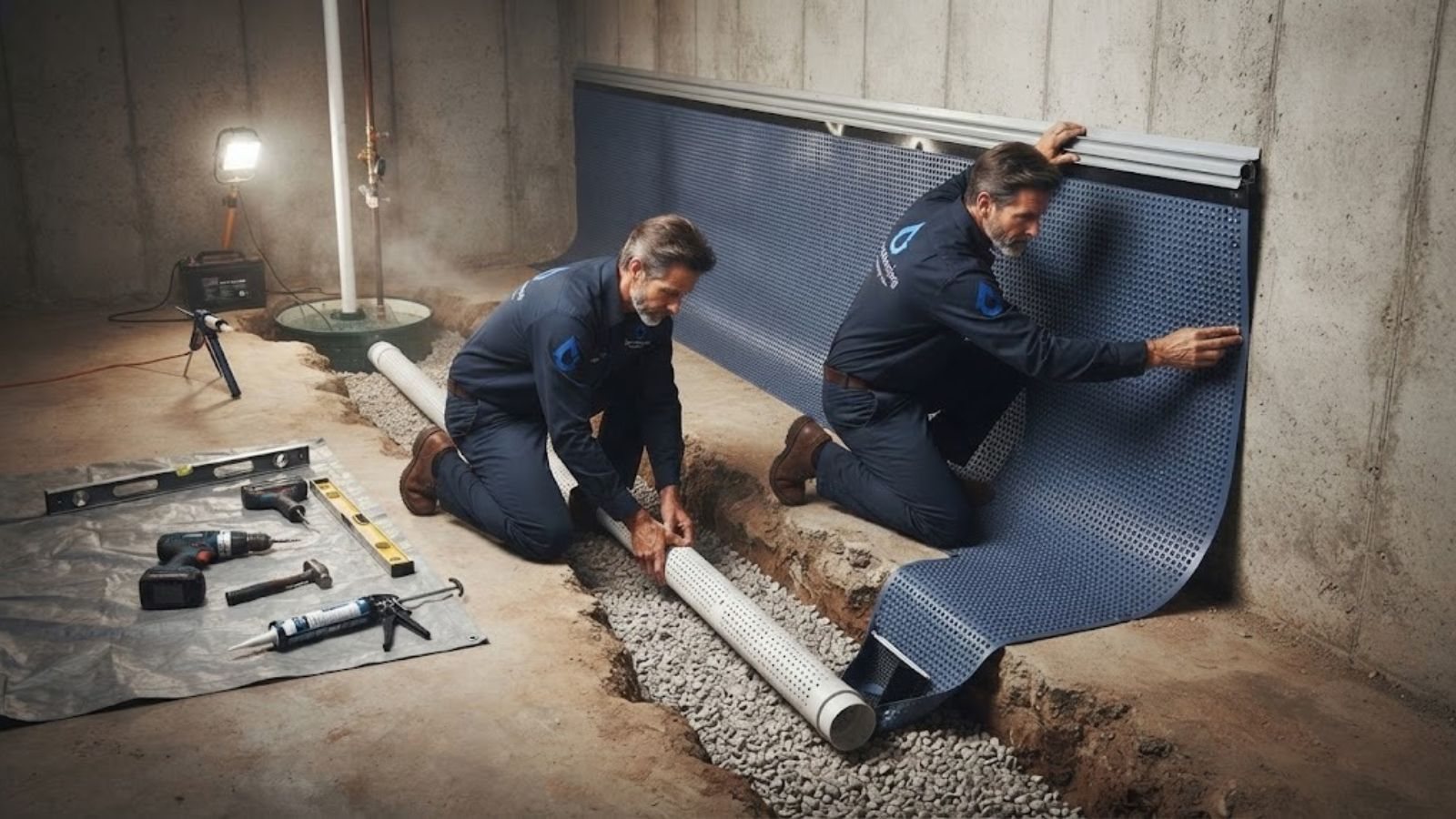
This usually starts as "my basement is damp all the time," or a musty smell that won't go away. Sometimes it's a visible line of efflorescence (white mineral residue) along the foundation wall a foot or two off the floor. All of those point to water getting into the basement through the foundation rather than from a single pipe leak, which is what waterproofing addresses.
Birmingham's clay-heavy soil holds water longer after rain than sandier soil does, and older foundations in the neighborhoods built before modern drainage codes were common often have no exterior drainage system at all, or one that has failed over decades. Water in clay soil pushes against the foundation wall under hydrostatic pressure and finds the path of least resistance, usually a hairline crack, the cove joint where the wall meets the floor, or a window well.
A sump pump alone (see sump pump installation & repair) handles water that's already collecting at the lowest point. It doesn't stop water from getting into the walls in the first place, and that's the difference between the two services - many basements genuinely need both. Foundation drainage more broadly is governed by standards set in Alabama's adopted residential building code, which is one reason a proper interior drain ties into a sump basin and code-compliant discharge rather than just dumping water at the foundation's edge.
Interior drainage systems
An interior drain system cuts a channel along the inside perimeter of the foundation at the cove joint. It installs perforated drain pipe in that channel and routes collected water to a sump basin, where a pump discharges it away from the house. That approach manages water once it has entered the foundation wall, rather than trying to stop it at the exterior soil, which is typically far more disruptive and costly on an already-finished lot. Cracks and the cove joint itself are also sealed as part of the same job to reduce how much water gets in before reaching the drain.
What drives the price
- Linear footage of interior drain needed along the affected walls.
- Whether a sump pump and basin already exist or need to be added.
- Crack and cove joint sealing scope.
- Basement finish level - unfinished basements are faster and less costly to access than finished ones.
Free estimates apply to this work - a technician evaluates the actual water pattern on-site before quoting a system. Call (855) 575-2890
Why interior drainage is usually the practical choice
Exterior waterproofing means excavating around the foundation to add a membrane and drainage board on the outside of the wall. It's the more thorough fix in theory, but on an already-landscaped lot in an established Birmingham neighborhood it means removing walkways, mature plantings, and in some cases a section of driveway to reach the foundation. An interior drain system achieves a similar practical result, keeping water out of the living space, by managing it once it reaches the inside of the wall instead. It doesn't disturb the yard, which is why it's the more common recommendation on finished lots rather than new construction.
- Note where water or dampness actually appears - a specific wall, a window well, or the whole perimeter.
- Look for a waterline stain or white mineral residue (efflorescence) along the foundation wall.
- Check whether the issue only happens during or right after heavy rain, versus staying damp constantly.
- Move stored items off the basement floor in the affected area before the estimate visit.
Common questions
Is basement waterproofing the same as a sump pump installation?
They're related but different. A sump pump collects and removes water that has already entered the basement's lowest point; waterproofing (an interior drain system) is designed to intercept water at the foundation wall before it spreads across the floor. Many basements need both working together.
What causes a damp basement even without visible flooding?
Persistent dampness without standing water is often groundwater seeping slowly through a porous or cracked foundation wall rather than a single leak, which is why sealing alone sometimes fails without an interior drain to actually move the water out.
Does Birmingham's clay soil make waterproofing more necessary?
Clay-heavy soil drains slowly and holds water against the foundation longer after rain than sandier soil, which increases hydrostatic pressure against older basement walls without exterior drainage.
Will waterproofing work on a finished basement?
Yes, though it typically requires removing a section of flooring and baseboard along the affected walls to install the interior drain, which is factored into the estimate.
Does sealing the walls alone fix a damp basement?
Sealant helps with minor moisture but doesn't stop water under real hydrostatic pressure from clay soil. Left on its own, sealed walls can still develop new cracks as water finds another path, which is why an interior drain is usually paired with sealing rather than used alone.
Serving greater Birmingham, AL
Basement Waterproofing in Birmingham, done right.
Upfront pricing, real dispatch, licensed-trade technicians.
Call (855) 575-2890