
Septic vs. Sewer: What Birmingham-Area Homeowners Should Know
Most homes closer to Birmingham connect to the public sewer system. Properties toward the outer edges of this coverage area often run on septic instead, and the two systems need very different care.
By the Birmingham Apex Plumbing team.
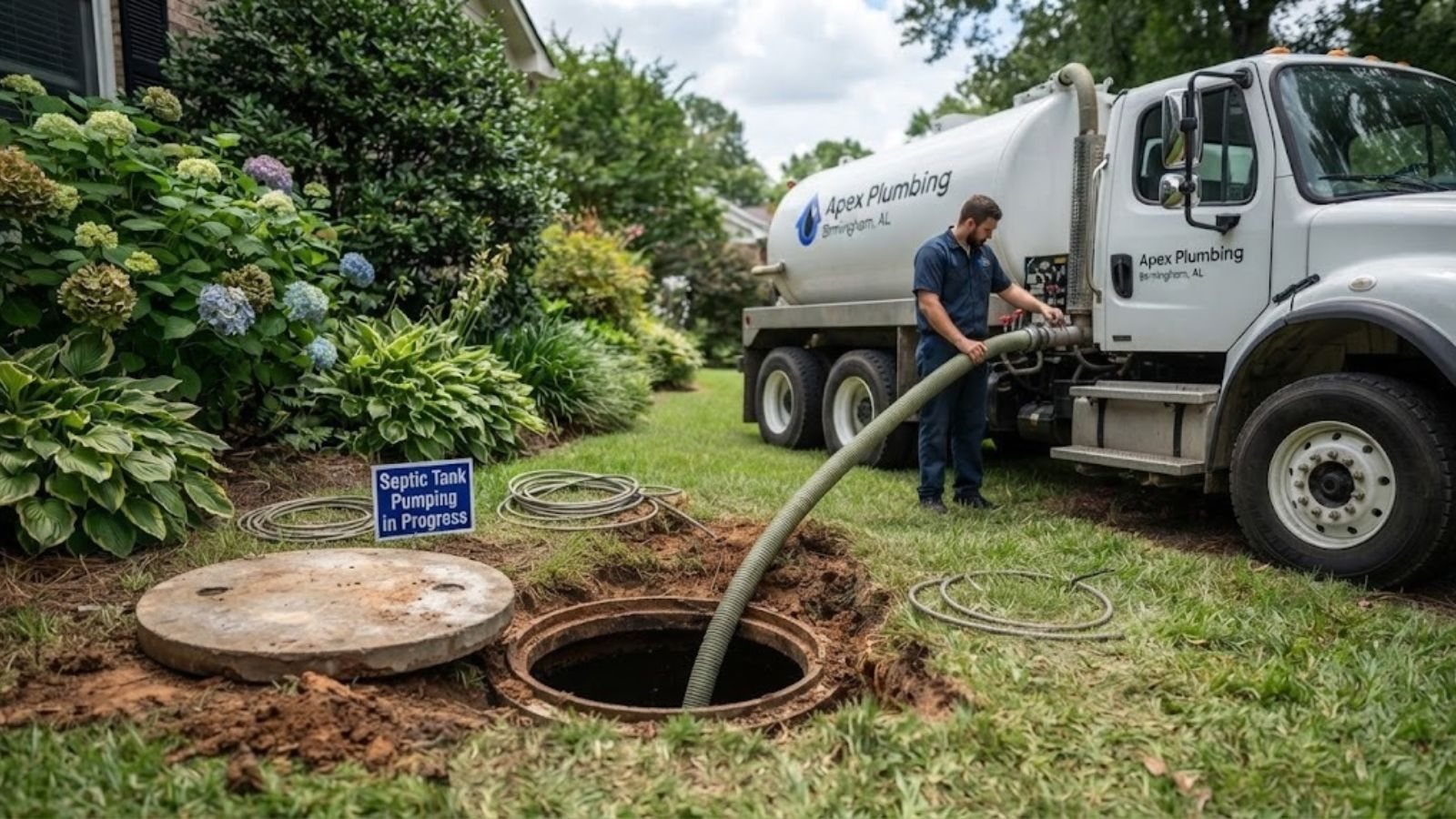
Whether a home connects to Jefferson County's public sewer system or runs its own septic system changes what a homeowner is actually responsible for maintaining, what warning signs matter, and what a plumbing problem in that home tends to look like. Knowing which one applies is the first useful piece of information for understanding how to actually take care of a home's wastewater system.
A quick way to check
A home on public sewer has a monthly or quarterly sewer charge on its water bill, since the county bills for that service alongside water usage. A home on septic has no such charge, and typically sits on a larger lot with a visible septic tank lid and drain field somewhere in the yard. When genuinely unsure, checking a recent water bill for a sewer line item, or asking a technician to confirm on a service visit, settles the question quickly.
The lateral is your responsibility
On public sewer, the county maintains the main line, and the homeowner maintains the lateral connecting the house to it. Sewer line repair covers problems in that private section: root intrusion, a bellied pipe, or an aging clay or cast iron line finally failing. A backup affecting just one home, rather than multiple homes on the same street, almost always points to this private lateral rather than the public system.
Pumping instead of a monthly bill
A septic system has no monthly sewer charge, but it does require periodic tank pumping, typically every three to five years depending on household size and water usage. Skipping that maintenance doesn't show up as a bill you forgot to pay; it shows up as slow drains, sewage odor near the tank or drain field, or an unusually soggy, lush patch of grass over the drain field. Those symptoms are the septic system's version of a warning that public-sewer homeowners simply don't need to watch for.
| Factor. | Public sewer. | Septic. |
|---|---|---|
| Ongoing cost. | Monthly/quarterly sewer charge. | No charge; periodic pumping cost instead. |
| Homeowner's responsibility. | The lateral only. | The entire system. |
| Main warning signs. | Recurring clogs, backups. | Slow drains, odor, soggy drain field. |
| Typical service interval. | As needed for repairs. | Pumping every 3-5 years. |
Different systems, different failure modes
A sewer lateral fails from age, root intrusion, or a cracked joint, problems addressed with repair, trenchless lining, or a traditional dig depending on severity. A septic system fails when the drain field becomes clogged with solids that were never pumped out in time, a failure that's far more expensive to fix than routine pumping would have been, sometimes requiring a full drain field replacement rather than a simple repair.
Where septic shows up most
Properties in and around Bessemer and other outer parts of this coverage area are more likely to run on septic than homes closer to central Birmingham. Lot size and how far public sewer infrastructure extends both play a role. A homeowner moving from a public-sewer home to a septic property benefits from understanding this difference before the first sign of trouble, not after.
A first call worth making
A homeowner who's uncertain which system their home actually has, especially after inheriting a property or buying without a clear disclosure, benefits from confirming it early rather than guessing. A technician can identify the system quickly during a routine visit, and knowing for certain changes what maintenance actually applies going forward. Treating an unknown septic system as though it were public sewer, simply by never checking, is exactly how a tank goes years past its recommended pumping interval without anyone noticing.
What changes the calculation
A home renovation that adds fixtures affects each system differently. On public sewer, the lateral's existing capacity usually accommodates a reasonable addition without much concern. On septic, adding fixtures increases the load on a tank and drain field sized for the home's original fixture count. That's worth discussing with a technician before finishing a renovation that could otherwise overwhelm a system that was working fine for the smaller original layout.
What buyers typically ask about
A buyer looking at a septic-system home commonly asks for recent pumping records and, in some cases, a septic system inspection separate from the standard home inspection. Having that documentation ready ahead of listing speeds up the transaction and demonstrates the system has actually been maintained rather than leaving a buyer to wonder. A seller without recent records can schedule a pumping and inspection proactively before listing, which turns a potential unknown into a documented, current baseline instead.
That small step often speeds up negotiations, since a buyer has less to be uncertain about.
Yard maintenance around a septic system
Parking vehicles or building a structure over a septic tank or drain field can damage the system and is worth avoiding when planning any yard changes on a septic property. Planting trees with aggressive root systems too close to the drain field also creates the same kind of root intrusion risk that affects sewer laterals, just applied to a different kind of pipe network. Knowing where the tank and drain field actually sit, rather than guessing, prevents accidental damage from routine yard work down the line. It also avoids the cost of fixing damage after the fact, once something's already been disturbed that never needed to be touched at all in the first place.
- Check a recent water bill for a sewer charge to confirm which system you have.
- If on septic, note roughly when the tank was last pumped.
- If on sewer, note whether any backup affects just your home or the whole street.
Common questions
Can a home be switched from septic to public sewer?
In some cases, if public sewer infrastructure runs nearby, though it typically requires permitting and a meaningful cost to connect. It's not a common or simple switch.
Is septic actually cheaper than sewer over time?
It depends on usage and how consistently maintenance is kept up. No monthly sewer bill is offset by periodic pumping costs and the risk of a much larger drain field repair if maintenance is neglected.
Do I need different homeowners insurance for a septic system?
Not typically a separate policy, though it's worth confirming what your specific policy covers for septic system failure versus what it covers for sewer lateral issues, since they can differ.
Serving greater Birmingham, AL
Have a plumbing question of your own?
Call and describe what you're seeing - a real technician can usually tell you what's going on before ever stepping through the door.
Call (855) 575-2890