
Softener or Filtration: What Birmingham's Hard Water Actually Needs
Softener and filtration get marketed as interchangeable upgrades. They actually solve two different problems, and knowing which one a household needs saves money.
By the Birmingham Apex Plumbing team.
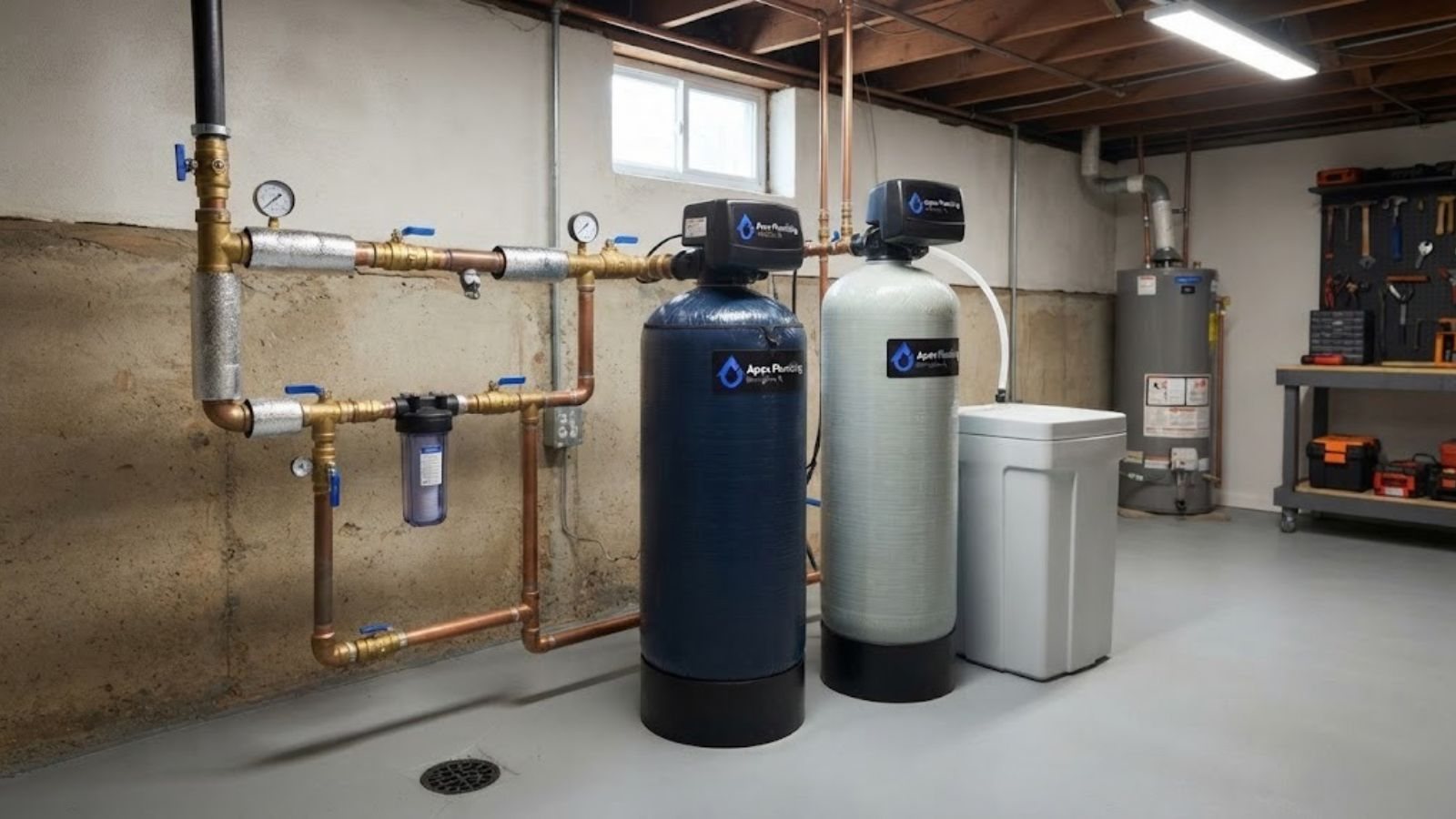
The Birmingham Water Works Board delivers water that's safe to drink but harder than average for the region, which shows up as scale on fixtures, spotting on dishes, and a shorter working life for water heaters. Whether the actual fix is a softener, a filtration system, or both depends on which specific symptom is the real complaint, not on whichever system a salesperson happens to be pushing that week.
Two different jobs
A water softener removes hardness minerals - calcium and magnesium - through ion exchange, directly addressing scale buildup on fixtures and inside a water heater. A filtration system targets taste, odor, sediment, and chlorine, typically through carbon filtration, and does nothing to address hardness. Confusing the two is common, and it's the single biggest reason a household installs one system and remains disappointed that a completely different problem is still there.
What to install for what you're seeing
White, chalky buildup on faucets and shower doors, spots on dishes after washing, and a water heater that seems to need repair more often than it should are all signs of hardness. That calls for a softener. Water that tastes or smells like chlorine, a metallic taste, or visible sediment in a glass of water all point to a filtration issue instead. A household noticing both sets of symptoms - which is common, since both problems share the same water supply - typically benefits from both systems installed together rather than picking one and hoping it covers everything.
| Symptom. | System that addresses it. |
|---|---|
| Scale buildup on fixtures and shower doors. | Softener. |
| Spots on dishes and glassware. | Softener. |
| Water heater needing repair more than expected. | Softener. |
| Chlorine taste or smell. | Filtration (carbon). |
| Metallic taste. | Filtration. |
| Visible sediment in a glass of water. | Filtration. |
Neither is a one-time purchase
A softener needs periodic salt refills and, less often, a resin bed replacement after years of service. A filtration system needs cartridge changes on a schedule tied to household water usage rather than a fixed calendar date. Neither system is install-and-forget, and skipping maintenance on either one gradually erodes the benefit until it's providing very little actual treatment. That upkeep is worth factoring into the decision up front rather than being surprised by it later.
Why this comes up in Bessemer
Households in Bessemer draw from their own water utility rather than the Birmingham Water Works Board. They still deal with meaningful hardness and often benefit from the exact same softener conversation as the rest of this coverage area. Water softener installation here is sized to the household's actual usage rather than a generic default, which matters regardless of which specific utility supplies the water.
Why a generic default doesn't work
A softener sized for a two-person household underperforms badly in a family of five, cycling through its regeneration process far more often than intended and running through salt faster than expected. The reverse problem, an oversized unit in a small household, wastes salt and water on regeneration cycles that didn't need to happen yet. Actual household size and daily water usage, not just square footage or bedroom count, are what a technician uses to size a system correctly the first time.
What changes if you don't own the home
A renter dealing with hard water symptoms has fewer options than a homeowner, since a whole-home system is a fixture the property owner would need to approve and typically pay for. A portable or point-of-use filter at the kitchen tap is a reasonable interim step for taste and drinking water quality without requiring landlord approval, though it does nothing for the hardness affecting the rest of the unit's fixtures.
Confirming the diagnosis before buying anything
Running a glass of tap water and letting it sit for a few minutes shows sediment settling if filtration is the issue. Rubbing a small amount of dish soap between wet hands and noticing whether it lathers easily or feels slippery and hard to rinse points toward hardness if lathering is difficult. Neither test replaces a proper water test, but both give a reasonable first sense of which problem is actually present before scheduling a visit or spending money on the wrong system entirely.
What installing both looks like
A household installing both a softener and a filtration system typically has them plumbed in sequence at the main line. Filtration comes first to remove sediment and chlorine, then softening addresses hardness, though the exact order can vary by system and installer preference. Both units together take up more space than either alone, worth factoring in for a utility closet or basement corner that's already tight on room. The combined upfront cost is real, but it's usually less than the cost of solving each problem separately over time through repeated fixture repairs and a shortened water heater lifespan.
Rare here, but worth mentioning
Almost every home in this coverage area connects to a municipal water supply, whether the Birmingham Water Works Board or one of the smaller local utilities in Trussville and Bessemer. Well water does occasionally show up on a rural property at the edges of this service area. It often carries its own additional considerations beyond hardness and chlorine, including iron staining and sulfur odor that a standard softener or carbon filter alone may not fully resolve. A technician evaluating a well-water property typically recommends a water test first. Well water quality varies far more property to property than the relatively consistent municipal supply most households here actually deal with day in and day out, year-round. That's regardless of what the calendar happens to say at any given moment throughout the year.
A quick water test settles the question either way, before spending money on the wrong system entirely.
Common questions
Do I need both a softener and a filter, or just one?
It depends on the specific symptoms. A household with only hardness-related complaints (scale, spotting) may only need a softener; one with taste or odor complaints may only need filtration. Many households benefit from both.
Will a whole-home system make tap water taste better immediately?
Filtration typically produces a noticeable taste improvement quickly. A softener's main effects (less scale, easier cleaning) build up over weeks as existing buildup gradually clears rather than changing instantly.
Is bottled water a reasonable alternative to installing a system?
For drinking water taste alone, it's an option, though an ongoing cost. It does nothing for the hardness affecting fixtures, laundry, and the water heater, which a softener addresses throughout the whole house.
Serving greater Birmingham, AL
Have a plumbing question of your own?
Call and describe what you're seeing - a real technician can usually tell you what's going on before ever stepping through the door.
Call (855) 575-2890