
Buying an Older Birmingham Home? Check the Plumbing First
A standard home inspection checks the plumbing that's visible. It rarely checks the plumbing that actually causes expensive surprises after closing.
By the Birmingham Apex Plumbing team.
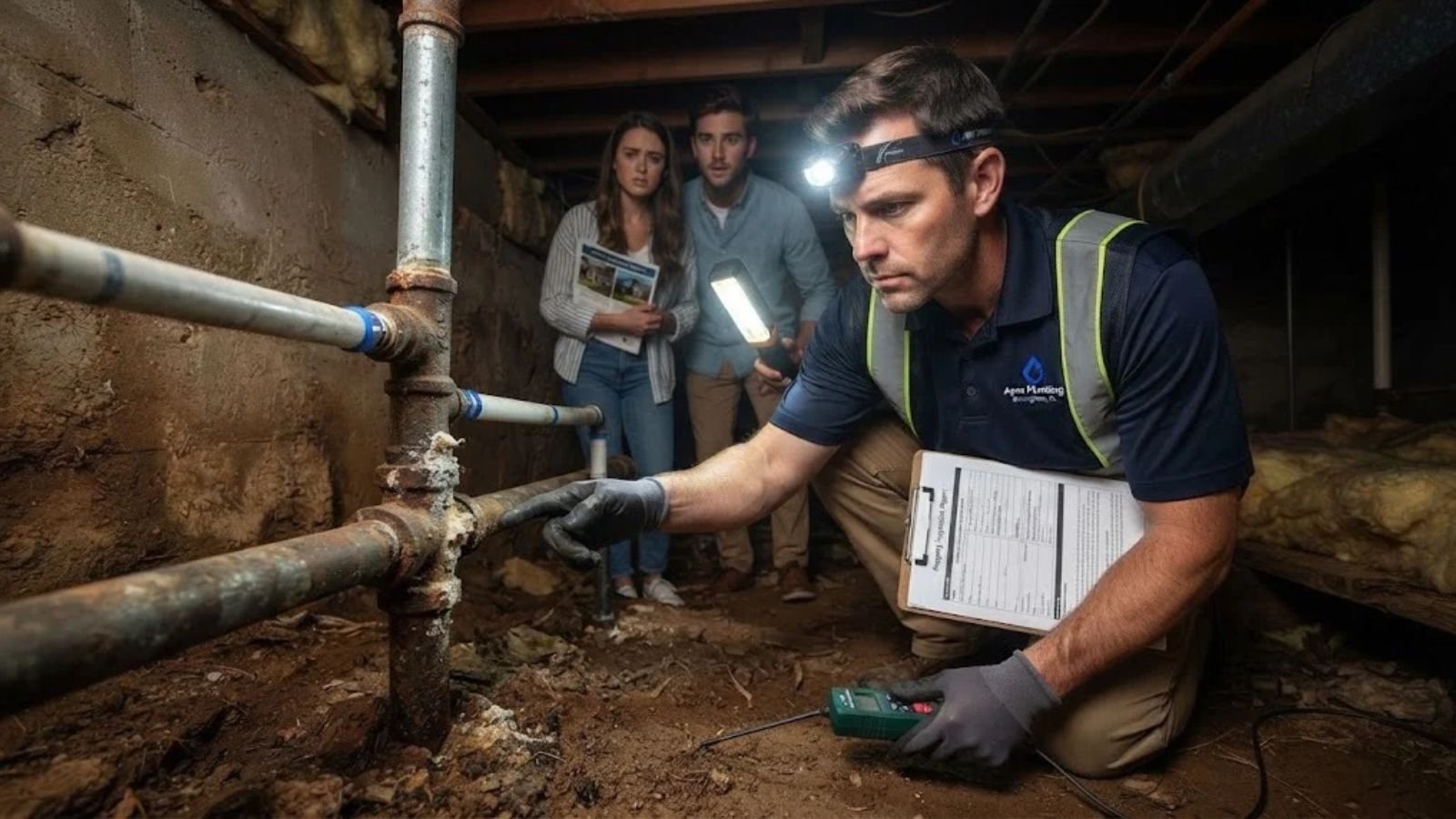
Birmingham's older neighborhoods have real character and real plumbing age to go with it. A general home inspector typically checks visible fixtures, water pressure, and obvious leaks within the standard walkthrough. What that inspection usually doesn't include is the two things that cause the most expensive post-purchase surprises: the actual condition of the sewer lateral, and the true age and material of the supply lines hidden inside the walls.
A sewer camera before closing
A sewer camera inspection costs a small fraction of what a sewer line replacement costs after the fact. It shows exactly what condition the lateral is in: original clay or cast iron holding up fine, root intrusion starting at the joints, or a section already collapsed and due for repair regardless of who owns the home next. For any home built before 1970, this single inspection is worth requesting specifically, since a standard inspection contract rarely includes it by default.
Material matters more than age alone
Ask directly whether the home has been repiped, and if so, when and with what material. A home still running on original galvanized steel is a different situation than one already converted to copper or PEX, even if both homes are the same age. A visible section under a sink or in a basement gives a quick visual check: a magnet that sticks means galvanized steel, a shiny reddish pipe is copper, and flexible colored tubing is PEX. None of this replaces professional confirmation, but it's a reasonable starting point during a walkthrough.
What's worth following up on
A disclosure mentioning any past plumbing repair, water damage, or a known slow drain deserves a direct follow-up question rather than being read past quickly. "Repaired in the past" can mean a single isolated fix, or it can mean the first sign of a pattern that's likely to continue. Asking for any available repair records or receipts gives a clearer picture than the disclosure form's brief description alone.
Turning findings into leverage
A camera inspection or leak detection finding gives concrete, specific leverage that a vague concern about "the home being old" never does. A confirmed root intrusion three feet from the foundation, or a documented pinhole leak history, is something a seller can reasonably be asked to address or credit before closing. Leak detection adds similar clarity for a home with any reported water usage concerns, confirming whether an issue actually exists before it becomes the buyer's problem alone.
Why this matters especially here
Homes in Homewood, largely built between the 1920s and 1950s, are exactly the housing stock where this extra diligence pays off most. A charming, well-maintained older home can still be sitting on a lateral that's one root intrusion away from a serious backup, and the only way to know before closing is to actually look.
Planning ahead rather than reacting
Finding a plumbing issue during due diligence doesn't have to mean walking away from the purchase. It means walking in with realistic numbers instead of surprises. A confirmed need for repiping or sewer repair can be factored into an offer, a repair credit, or a post-closing budget line, the same way a buyer plans for a roof or HVAC system nearing the end of its life. Treating plumbing age with the same seriousness as those other major systems, rather than as an afterthought, is what separates a prepared buyer from one caught off guard six months into ownership.
Getting the most out of the standard inspection
A general home inspector still provides real value even without a specialized camera or leak detection add-on. Ask specifically what the inspector's report says about visible pipe material, water heater age, and any noted water stains or dampness anywhere in the home. Those notes, combined with the specialized checks recommended above, build a genuinely complete picture rather than relying on either source alone. A good inspector welcomes specific questions rather than treating the walkthrough as a box-checking exercise.
What a new owner should do in the first month
Even with a clean inspection, scheduling a baseline plumbing check within the first month of ownership is a reasonable habit for any older home purchase. That visit establishes a documented starting point, confirms the technician's own read on the home's plumbing matches what came up during due diligence, and catches anything that a rushed pre-closing timeline might have missed entirely.
More than a quick look
A baseline visit typically includes checking water pressure at multiple fixtures, confirming the water heater's age and condition against the seller's disclosure, and a visual check of any accessible supply and drain lines. For a home where a sewer camera inspection wasn't part of the original due diligence, this is also a reasonable time to schedule one if it wasn't already done. The cost is the same whether it happens before or after closing, and doing it after still gives useful information for planning future maintenance.
None of this needs to happen all at once. Spreading these checks across the first few months of ownership is entirely reasonable for a home that isn't showing any active symptoms.
What matters is that it happens at all, on a timeline that fits the new owner's schedule. That's better than a strict deadline imposed from outside, since the point here is thoroughness, not speed, for a decision this size and this important to get right the first time around.
- Request a sewer camera inspection for any home built before 1970.
- Ask directly whether and when the home was repiped, and with what material.
- Follow up on any disclosure mentioning past leaks or water damage.
- Get repair records or receipts for any past plumbing work if available.
Common questions
Can I request a sewer camera inspection as part of the home inspection contingency?
Yes, and it's worth doing so explicitly rather than assuming the standard inspection covers it. Most general home inspectors don't include a sewer camera unless specifically requested and arranged separately.
Is it too late to check the plumbing after closing?
No, but leverage to negotiate repairs or credits is gone once the sale closes. Any issue found after closing becomes the new owner's repair to handle directly.
Does a newer-looking kitchen or bathroom mean the plumbing was updated too?
Not necessarily. A cosmetic renovation sometimes keeps the original supply and drain lines behind the walls, which is exactly why asking directly about repiping history matters more than visual impressions.
Serving greater Birmingham, AL
Have a plumbing question of your own?
Call and describe what you're seeing - a real technician can usually tell you what's going on before ever stepping through the door.
Call (855) 575-2890