
Signs an Older Birmingham Home Actually Needs Repiping
One pipe leak is a repair. A pattern of them, in an older Birmingham home, is usually something else entirely - and worth recognizing before the third or fourth call.
By the Birmingham Apex Plumbing team.
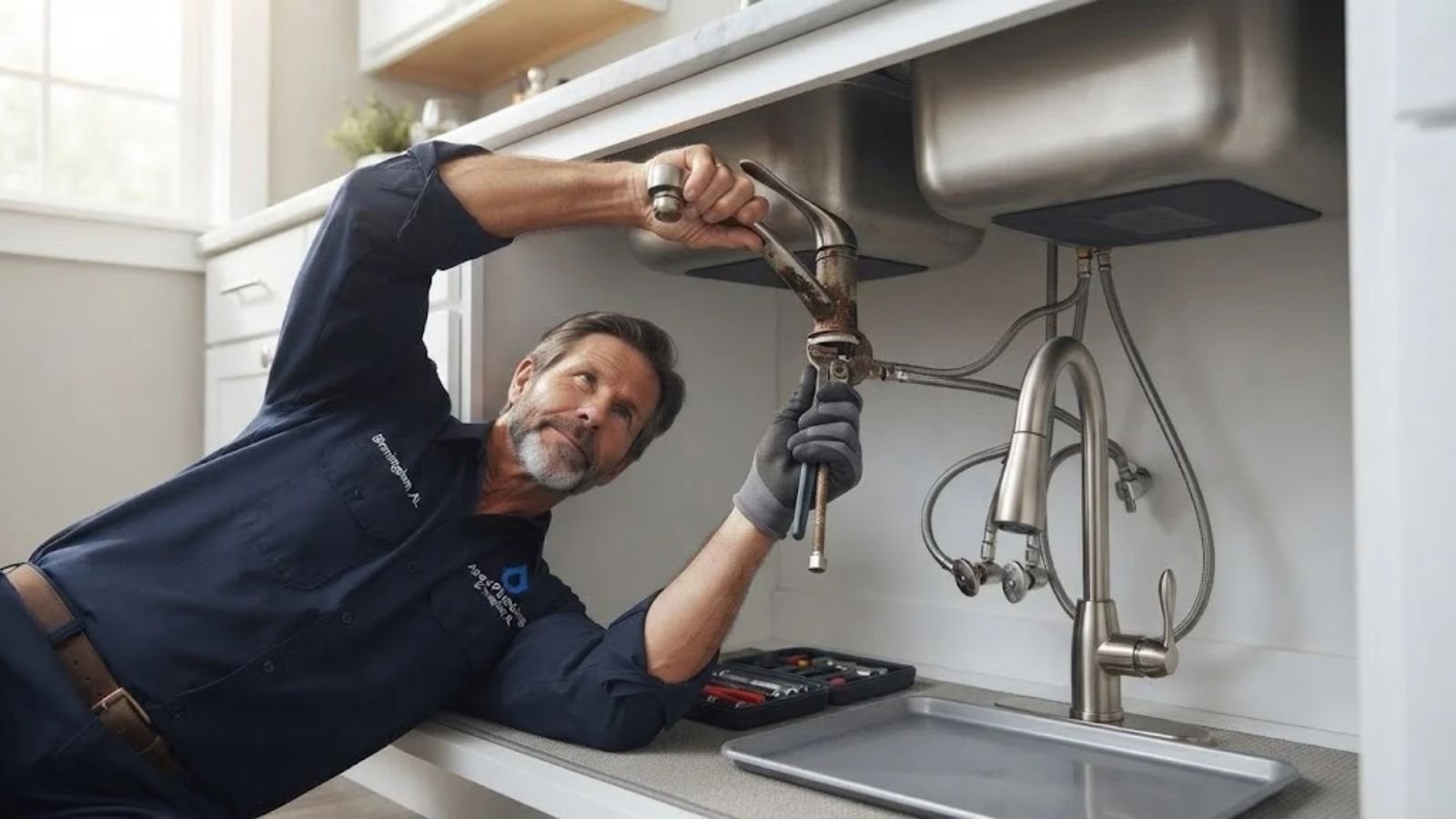
Every home eventually needs a plumbing repair. The question worth asking after the second or third one in a short period is whether the actual problem is the specific fitting that failed, or the pipe material itself reaching the end of its working life. In Birmingham's older neighborhoods, that second scenario comes up often enough to have a name: widespread galvanized or copper corrosion that no single repair actually fixes.
Four signs worth taking seriously
Rust-colored water, especially right after the house has sat unused for a few hours, points to corrosion actively flaking off the interior of a galvanized line. Water pressure that's dropped gradually over months or years, rather than suddenly, usually means mineral and rust buildup has narrowed the pipe's interior diameter throughout the system, not just at one fixture. A second or third pipe leak within a year, especially in different rooms or different sections of pipe, means the material is failing broadly rather than one section having bad luck. And visible green or white corrosion at pipe joints, where accessible, is often the most direct visual confirmation available without opening a wall.
Where the line actually gets drawn
A single leak, even in an older home, is usually still just a repair - the pipe around it may be fine, and there's no reason to replace working material preventively. The calculation changes once repairs start recurring: at that point, each additional repair is really just delaying the same underlying failure at a different spot, and whole-home or partial repiping stops treating each leak individually and addresses the actual cause.
Before jumping to that conclusion, though, it's worth confirming the diagnosis. A recurring leak that turns out to be isolated to one fixture's connection, rather than the supply lines generally, might just need a targeted fix - leak detection can confirm which situation is actually happening rather than assuming from the home's age alone.
This pattern comes up regularly in Bessemer's older neighborhoods, where housing dates back to the city's original late-19th and early-20th century growth - some of the oldest plumbing infrastructure across this entire coverage area.
Why repeated repairs add up faster than a repipe
Each individual repair looks cheaper than a whole-home repipe in isolation, which is exactly why homeowners often keep patching one leak at a time for years before making the switch. The math changes once actual repair history is added up. A service call for one leak. A different service call eight months later for another. Drywall repair after both. The accumulated water damage from whichever leak went unnoticed longest before it was found. Together, these often exceed what a repipe would have cost from the start. That's before counting the ongoing risk of a leak happening somewhere less convenient - inside a wall behind finished cabinetry, or above a finished ceiling - where the damage from a single failure can be far more expensive than the plumbing repair itself.
What a pattern of leaks can mean for coverage
Homeowners insurance typically covers sudden, accidental water damage but treats gradual deterioration differently. A documented history of repeated leaks from the same aging plumbing system can complicate a future claim if an insurer determines the damage was foreseeable rather than sudden. This isn't a reason to panic over a first repair. It is a real consideration once a pattern is established: addressing known widespread corrosion proactively is generally viewed more favorably than repeatedly patching around a known ongoing problem and hoping the next failure doesn't happen somewhere costly.
Setting realistic expectations
Most homeowners considering repiping for the first time picture more disruption than the job actually involves. Water is shut off during working hours and restored each evening, so a multi-day job doesn't mean days without any water at all. Access points are typically small, targeted cuts in drywall near fixtures and along the path new lines need to run, not full walls torn out room by room. The crew pressure-tests every new line before closing anything up, which catches a connection issue immediately rather than after drywall repair is already finished. Drywall patching and paint touch-up follow the plumbing work, usually within the same overall timeline as the pipe replacement itself.
Not every repipe means the whole house
A pattern of leaks concentrated in one bathroom or one section of the house, rather than spread throughout, doesn't automatically mean the entire home needs new supply lines. A partial repipe targeting just the affected section is a legitimate option when the rest of the home's plumbing is confirmed to be in genuinely better condition by inspection, not just assumed to be fine because it hasn't failed yet. The distinction matters financially, since a partial repipe costs meaningfully less than a full one. It's worth asking a technician directly whether the home's specific leak pattern actually supports a partial scope or whether the underlying corrosion is broad enough that a partial fix would just delay the same conversation.
When it's worth confirming the diagnosis
A recommendation for whole-home repiping, especially after just one or two repairs, is reasonable to double-check with a second technician if the homeowner isn't fully confident in the diagnosis. Asking specifically what evidence supports the recommendation - visible corrosion at accessible joints, a documented pattern of past repairs, water pressure measurements compared against expected values - gives a concrete basis to evaluate rather than taking the recommendation on faith. A technician confident in the diagnosis should be able to explain the specific signs pointing to widespread failure rather than defaulting to repiping as a generic upsell for any older home. A brief, specific explanation is a reasonable thing to expect before committing to a project this size. That's true whichever technician ends up actually doing the work on the house itself, since the actual crew doing the job matters as much as the initial recommendation given at the start of the conversation.
- Shut off the main water supply if the leak is active and can't be isolated to one fixture.
- Photograph any visible water damage before cleanup, for insurance documentation.
- Note the location and roughly how long the leak may have been active, if known.
Common questions
Is discolored water always a sign of pipe corrosion?
It's the most common cause in an older home with metal supply lines, but a water main disruption in the area can also cause temporary discoloration. If it clears up after running water for a few minutes and doesn't recur, it's less likely to be internal pipe corrosion.
How long does whole-home repiping actually take?
For a typical single-family home, usually a few days, including drywall and finish repair after the plumbing work itself is complete.
Serving greater Birmingham, AL
Have a plumbing question of your own?
Call and describe what you're seeing - a real technician can usually tell you what's going on before ever stepping through the door.
Call (855) 575-2890