
Preparing Birmingham Plumbing for a Rare Winter Freeze
Birmingham sees hard freezes only a handful of nights most winters. That rarity is exactly why so many homes here aren't actually prepared for one.
By the Birmingham Apex Plumbing team.
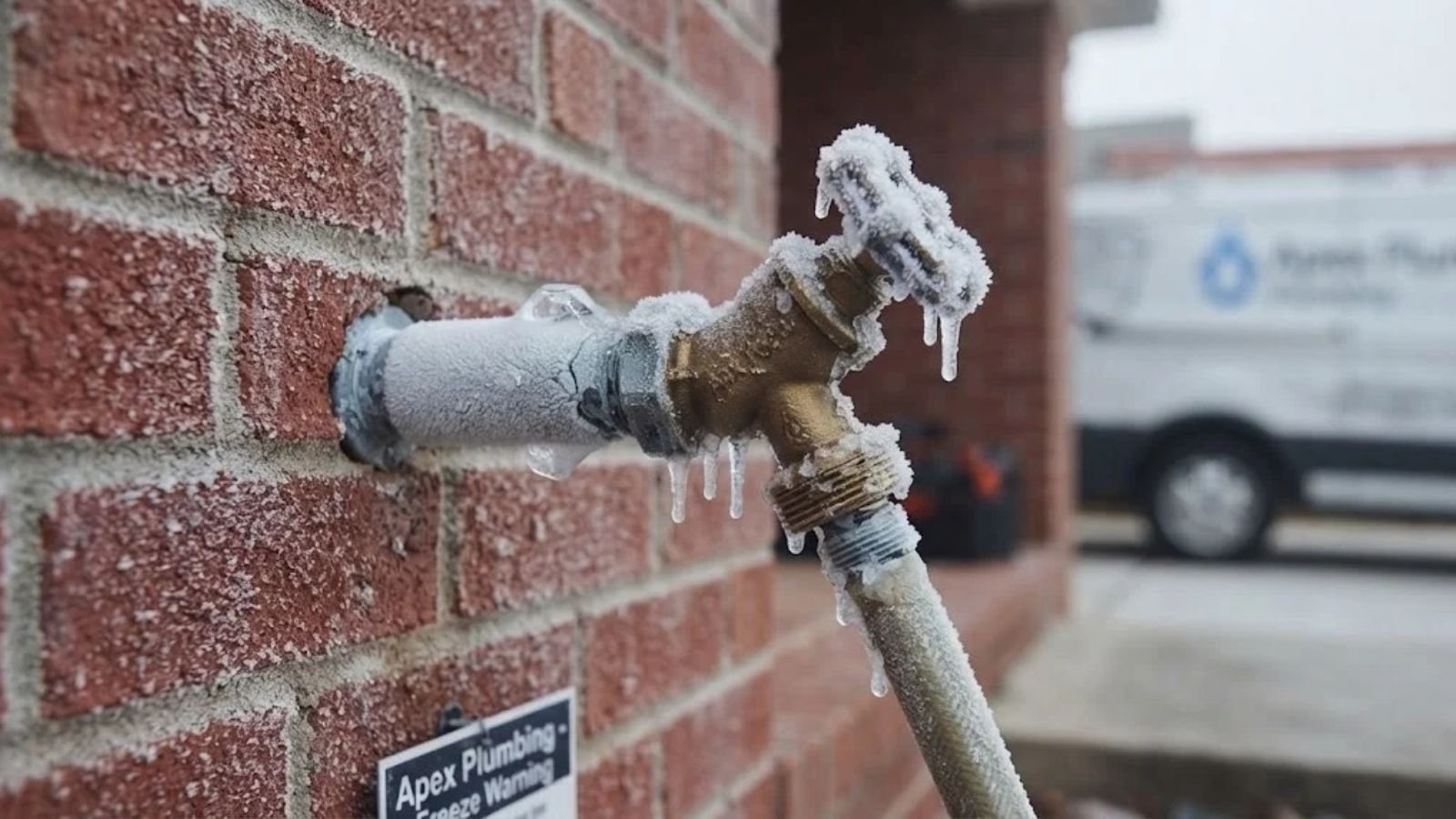
Homes in genuinely cold climates are built for freezing temperatures as a matter of course. Pipes run inside heated envelopes, insulation is standard, and exposed plumbing is rare by design. Birmingham homes weren't built with that same assumption, since a hard freeze here is the exception rather than the rule. That gap is exactly why a single overnight freeze can cause real damage in this area even though the same temperature would be unremarkable somewhere colder.
Exposed pipe, not the whole house
The pipes at risk are almost always the exposed ones. Hose bibs on the exterior wall. Supply lines running through an unheated crawlspace or garage. Any pipe in an exterior wall with little or no insulation behind it. Interior pipes running through heated living space rarely freeze even during a hard cold snap, since the surrounding air stays well above freezing. Identifying which pipes in a specific home actually fall into the at-risk category is the useful first step, rather than treating the whole house as equally vulnerable.
Simple steps, done before the cold arrives
Disconnecting garden hoses and shutting off exterior hose bib valves, if the home has them, removes trapped water that would otherwise freeze and crack the fixture. Foam pipe insulation sleeves on exposed pipes in a crawlspace or garage are inexpensive and take an afternoon to install. Opening cabinet doors under sinks on exterior walls lets warmer household air reach the pipes inside. And letting a faucet drip slightly during the coldest overnight hours keeps water moving, which makes freezing meaningfully less likely than in a pipe sitting completely still.
What to do, and what not to do
A frozen pipe that hasn't burst yet can sometimes be thawed safely. Shut off the main water supply first. Apply gentle heat with a hair dryer or heating pad, working from the faucet end toward the blockage. Never use an open flame, which is a real fire risk against wood framing and can also cause a sudden pressure spike if the pipe thaws too quickly. If a pipe has already burst, shutting off the main water supply immediately matters more than anything else, since that's what actually stops the flooding while a technician is on the way.
A repeat pattern worth knowing
Older homes in Trussville and similar inland areas, further from downtown Birmingham's urban heat island effect, see freeze-related calls more often than homes closer to the city center during the same cold snap. A galvanized or copper supply line already narrowed by years of corrosion is also more likely to crack under freezing pressure than a newer PEX line, which flexes slightly rather than splitting. That's one more reason older plumbing is worth a proactive look before winter rather than after a freeze exposes a weak spot.
Checking for damage once temperatures rise
A pipe that survived a freeze without visibly bursting can still have a hairline crack that only leaks once the ice inside melts and pressure returns to normal. Checking under sinks, in the crawlspace, and near any exposed pipe once temperatures rise catches this kind of delayed leak before it causes real water damage. Leak detection is worth calling for if water usage seems higher than normal in the days following a freeze, even without an obvious visible leak anywhere in the house.
An often-overlooked risk point
A water heater installed in an unheated garage or attic space, less common than an indoor closet install but still present in some Birmingham homes, faces its own freeze risk. The tank itself rarely freezes solid given its size and insulation, but exposed supply and drain lines feeding it can. A water heater that stops producing hot water immediately after a hard freeze, with no other explanation, is worth checking for a frozen or cracked line at the connection points before assuming the unit itself has failed.
Extra considerations worth knowing
A renter noticing exposed, uninsulated pipe in a crawlspace or garage should raise it with a landlord before the first hard freeze of the season, since prevention is far cheaper than emergency repair for everyone involved. A homeowner in one of Birmingham's older neighborhoods faces a different situation. Original plumbing there sometimes runs through spaces that were never intended to stay unheated. That homeowner benefits from a one-time walkthrough with a technician to identify every actual risk point in that specific house, rather than guessing from a generic checklist alone.
Not all pipe wrap is equal
Foam pipe sleeves are the standard, inexpensive option and work well for the occasional freeze Birmingham sees. Sizing them to match the pipe's actual diameter gives a snug fit rather than a loose wrap that leaves gaps. Heat tape, an electrically heated wrap plugged into a nearby outlet, offers stronger protection for a pipe that's proven especially vulnerable in past freezes, at the cost of needing power to actually work during the exact kind of severe weather that sometimes also causes outages. For most Birmingham homes, foam sleeves on the handful of genuinely exposed runs cover the realistic risk without needing the added complexity of heat tape everywhere.
- Disconnect garden hoses and shut off exterior hose bib valves.
- Open cabinet doors under sinks on exterior walls to let warm air reach the pipes.
- Let vulnerable faucets drip slightly during the coldest overnight hours.
- Know where the main water shutoff valve is, in case a pipe bursts.
Common questions
How cold does it actually need to get for pipes to freeze here?
Sustained temperatures at or below freezing for several hours put exposed, unprotected pipes at risk, especially overnight. A brief dip that doesn't last isn't usually enough on its own.
Is it worth insulating pipes for freezes that only happen once or twice a year?
Yes - foam pipe insulation is inexpensive and takes minimal effort to install, and it protects against every future cold snap once it's in place, not just the current forecast.
Can I use a space heater to keep a crawlspace from freezing?
It's possible but requires real caution around fire risk and moisture. A technician can advise on safer, more targeted options like heat tape for specific exposed pipe runs.
Should I leave a faucet dripping the whole winter as a precaution?
No, that's unnecessary and wastes water most of the season. It's a targeted step for the specific nights a hard freeze is actually forecast, not a standing winter habit.
Serving greater Birmingham, AL
Have a plumbing question of your own?
Call and describe what you're seeing - a real technician can usually tell you what's going on before ever stepping through the door.
Call (855) 575-2890